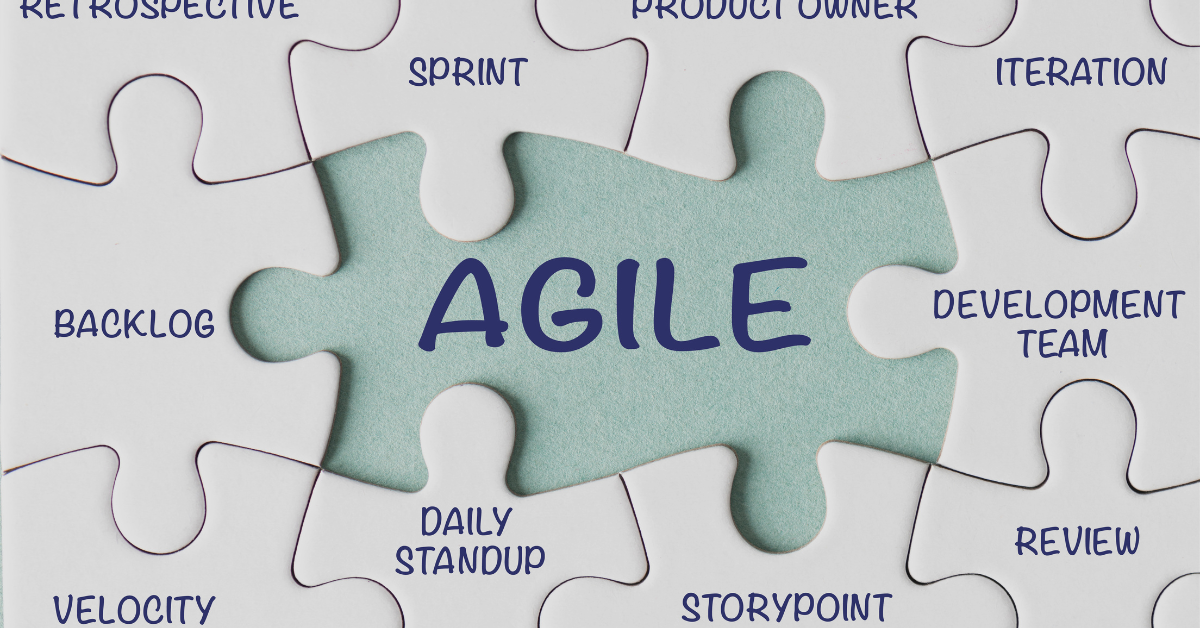
Why Most Teams Don’t Use “Pure Agile” (And What They Actually Do Instead)
Why “pure Agile” rarely survives contact with reality
Most teams don’t avoid “pure Agile” because they don’t understand it.
They avoid it because real constraints, risks, and incentives force them into hybrids that look messy but keep organisations functioning.
In practice, teams blend Agile language with project controls, governance, and stakeholder expectations. Over time, they optimise not for textbook purity but for least pain, the minimum disruption needed to keep delivery moving and trust intact.
This isn’t failure, it’s exactly what the State of Agile reports have been showing for years.
This article explains:
why “pure Agile” rarely survives contact with real organisations
the hybrid patterns teams actually use
how to diagnose your current delivery model honestly
practical adjustments teams can make without a full transformation
Agile frameworks assume conditions most organisations don’t have. When those assumptions collide with reality, teams adapt.
1. Funding and governance are still project-shaped
Agile assumes product or value-stream funding. Most organisations still approve work through:
time-boxed projects
fixed business cases
quarterly or annual budgets
Finance and PMOs are rewarded for predictability, not learning.
As a result:
Agile ceremonies exist, but commitments are still fixed early
backlogs become contractual rather than adaptive
change is framed as risk, not insight
This is why many teams end up with Agile rituals layered on top of traditional controls.
2. Teams aren’t truly cross-functional or stable
Scrum assumes stable teams with all skills required to deliver. In practice:
specialists are shared across teams
people are partially allocated
dependencies dictate sequencing
Work moves through queues rather than flowing end-to-end; and with Agile now widely adopted, many teams are “Agile in name” while still operating inside siloed structures.
This is why teams often say they’re Agile, but still experience:
blocked work
meaningless velocity
long lead times
Agile doesn’t fail here, organisational design does.
3. Stakeholders want certainty, not options
Agile emphasises discovery and iteration. Stakeholders often need:
dates
costs
scope summaries
confidence they can report upwards
So discovery is squeezed into the start, and learning later becomes uncomfortable.
Instead of Agile shaping expectations, expectations reshape Agile into a reporting tool.
4. Behaviour changes slower than process
Most teams include:
people with strong Agile experience
people shaped by poor implementations
people conditioned by command-and-control delivery
Without coaching:
stand-ups become status updates
retros become venting sessions
Product Owners act as ticket managers
This creates Agile theatre visible ceremony with little behavioural change.
5. The environment punishes failure more than it rewards learning
Agile assumes psychological safety. Many environments still:
punish missed dates
reward certainty over early risk discovery
treat incidents as blame events
Teams respond by over-promising and under-experimenting.
The hybrid patterns teams actually use
Most teams don’t choose a hybrid intentionally, they drift into one. Naming the pattern helps teams improve it.
Pattern 1: Water-Scrum-Fall
upfront discovery
iterative build
traditional testing and release
Works when: constraints are unavoidable and feedback still arrives early
Fails when: leadership insists it’s “pure Agile”
Pattern 2: Scrum for cycle, Kanban for flow
sprints provide planning rhythm
execution runs as continuous flow
This is common in:
platform teams
DevOps
data and BAU environments
Works when: teams use flow metrics (cycle time, WIP)
Fails when: teams are forced to “commit” while absorbing constant interrupts
Pattern 3: Dual-track (Discovery + Delivery)
discovery explores options
delivery commits to validated work
Works when: product, tech, and delivery operate as a true triad
Fails when: discovery becomes a checkbox exercise
How to diagnose your current way of working
Before fixing anything, map how work actually flows.
Step 1: Map one real item end-to-end
Choose a typical piece of work and ask:
where did it originate?
who approved it?
where did it wait?
how was “done” defined?
Hidden queues and real decision-makers appear quickly.
Step 2: Label Agile vs non-Agile elements
Mark where you:
iterate and learn
make one-off bets
wait for approval
commit dates without evidence
You’ll see you already run a hybrid, the question is whether it’s deliberate.
Practical adjustments teams can make in 90 days
These changes improve delivery without a full transformation.
1. Make your hybrid explicit
Instead of “we do Scrum,” say:
how planning works
how flow works
where constraints sit
Clarity reduces friction.
2. Redefine “Done” around value and risk
Define Done by:
where it can safely run
how it’s verified
what learning is captured
If Done is missed regularly, adjust scope, not pressure.
3. Create a visible “options” lane
Reserve 10–15% capacity for:
spikes
prototypes
experiments
Each option must lead to a decision: scale, reshape, or stop.
4. Reframe governance conversations
Shift from: “Are we on track for scope X by date Y?”
to: “Given what we’ve learned, is this still the best way to achieve outcome Y?”
This keeps governance while legitimising adaptation.
Why this matters for project and delivery leaders
If you’re in delivery, PM, or leadership roles, your value isn’t in enforcing frameworks. It’s in:
reducing delivery risk
increasing learning speed
building trust across teams
Mature teams don’t argue about labels. They own their hybrid and improve it deliberately and if you’re deciding what “good” looks like for your organisation, start with Agile vs Waterfall vs Hybrid delivery models.
Final thought
Your team may never be “pure Agile.”
That’s fine.
What matters is whether your way of working is:
honest
understood
improving
The teams that quietly deliver the most value are usually the ones that stop chasing purity and start designing reality
Frequently Aske Questions
What are “hiring signals” in the tech job market?
Hiring signals are the clues employers use to judge how risky it is to hire you like role fit, proof of applied skills, and how clearly you communicate your work.
Do certifications still matter in 2026?
Yes, but mostly as supporting evidence. In 2026, employers usually prioritise proof you can apply skills in real contexts over certificates alone.
Why am I applying for tech roles and hearing nothing back?
Often it’s not your ability it’s that your CV, LinkedIn, or portfolio isn’t showing clear role alignment and evidence quickly enough for busy screeners.
What’s the fastest way to improve my chances in 60–90 days?
Pick one clear role target, build 2–3 role-aligned proof points (projects/case studies/artefacts), and update your CV and LinkedIn to make that evidence easy to find.
Does this advice apply to the UK job market?
Yes. In the UK job market, employers commonly filter for clarity, applied capability, and confidence in communication especially when application volume is high.